

If you’ve followed me on social media lately, you might have noticed me posting about my “oldies but goodies” — older art that’s finding its way onto my website and Etsy shop. This might leave you wondering: why do artists have so much old art?
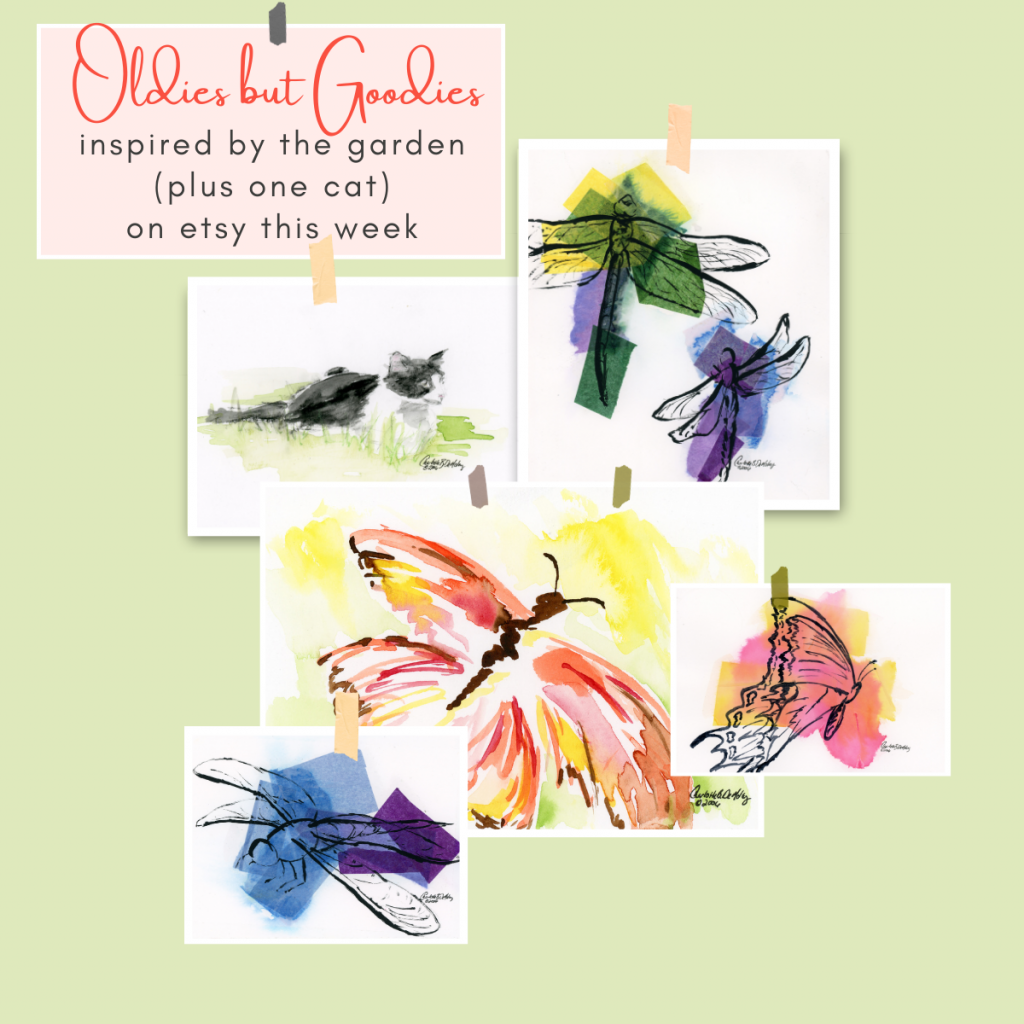
Here’s the simple answer: I’ve been a professional artist for a long time. Nearly 35 years, in fact. That’s a lot of time to create a lot of art. Since 1995, I’ve kept a detailed inventory of every piece I considered “done” and “sellable.” This doesn’t even count the hundreds, possibly thousands, of sketches and studies that never made the cut, or the frustrating pieces that went straight into the trash.
As of today, I’ve documented over 400 pieces of art, not including any digital work or photography. Of those, about a quarter are still available.
Now, the assumption is that art that doesn’t sell quickly must not be good. Sometimes that’s true. Like any professional, you hope your skills improve with practice. But there’s a more common reason artists end up with stacks of unsold “old” art: exposure.
Most traditional ways of selling art—through shows, galleries, and art markets—have limits on the age of the artwork, usually requiring it to be created within the last two to five years. While this seems reasonable, it becomes a huge limitation when you’ve been creating for decades.
Adding to the challenge, many venues don’t allow repeat pieces. For example, a great gallery I was in previously didn’t have an age limit, but it did have a “no-repeats” rule. Since they rotated their walls every six weeks, any unsold work was quickly out of sight.
You might think, “Just put it in another show!” But that gets expensive quickly. The art business can be a bit of a “pay-to-play” game. Most shows charge artists $15-$50 just to enter a single piece, and they also take a commission on any sales. Keeping art in front of potential buyers is a real struggle.
Fortunately, the internet has changed the game as more and more people are getting comfortable with purchases of all price points being made online. I can now list any of my work on my website or Etsy for as long as I want, which is exactly what I’ve been doing with my “inventory project.”
This project is a deep dive into every piece of art I still have. For each one, I’m taking a hard look and asking a few key questions:
- Does this still represent me? This isn’t about whether the art is “good” or “bad.” Some of my older pieces are still my favorites. But some just don’t reflect my current style. Those get destroyed.
- Could the composition be stronger? Sometimes, a painting has a few great areas but others that don’t contribute to the overall piece. I have no problem cutting a piece down to make it better.
- Do I have high-quality images? I’m rephotographing or scanning everything. Even though I’ve had good cameras over the years, today’s smartphone cameras are incredible. For larger canvases, I’ll still use my DSLR, but for smaller works, a high-resolution scan or an iPhone photo is definitely better than my older images..
- Time to list it for sale. Larger works and pieces from a series go on my website, while smaller, more affordable art goes in my Etsy shop for an easy-to-browse experience. I’ve wanted to get all my existing work online for years, and now I’m finally making it happen.
I hope this gives you a bit of insight into why an artist’s back catalog isn’t a sign of failure, but rather a collection of stories and a reflection of a creative journey. Every piece, new or old, has something to say.
So, as I continue this journey of rediscovering and sharing my older work, I’d love for you to explore it with me. Take a look at my website or browse my Etsy shop. You may find some new, old art.